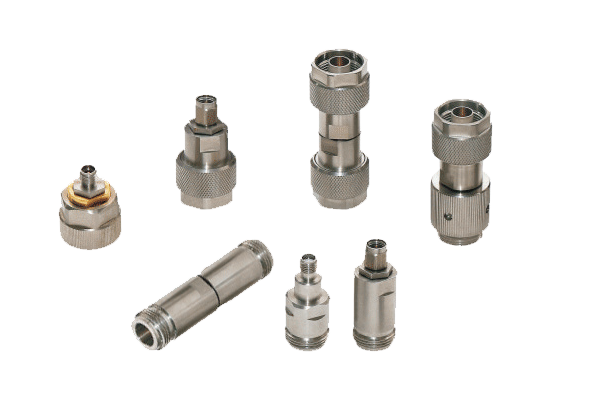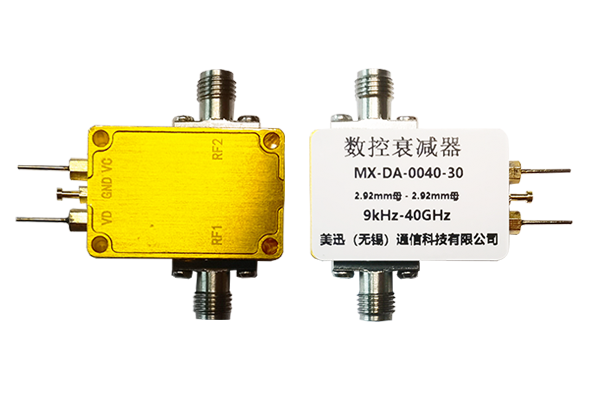
Pin diodes have become a crucial element in high-frequency systems because of their innate electrical traits Their ability to operate with fast state changes and low capacitance while maintaining minimal insertion loss fits them to switching modulation and attenuation tasks. The basic mechanism behind pin diode switching depends on regulating the device current via an applied bias voltage. The applied voltage modifies the depletion layer thickness at the p–n interface thus affecting conductivity. Varying the bias voltage facilitates reliable high-frequency switching of PIN diodes with small distortion penalties
PIN diodes are often used in elaborate circuit arrangements where strict timing and control are essential They are suited to RF filtering arrangements for selective band pass and band stop operations. Their capability to tolerate high-power signals allows deployment in amplifiers power dividers and generator equipment. The development of compact efficient PIN diodes has increased their deployment in wireless communication and radar systems
Coaxial Switch Design and Performance Analysis
Engineering coaxial switches requires meticulous handling of diverse design variables Switch performance is influenced by factors like the switch type operating frequency and insertion loss characteristics. Optimal coaxial switches balance reduced insertion loss with enhanced isolation between connections
Examining performance entails assessing return loss insertion loss and isolation figures. Assessment employs simulation, analytical modeling and experimental measurement techniques. Accurate analysis is crucial to ensure reliable coaxial switch operation across systems
- Simulation packages analytic approaches and lab experiments are commonly applied to analyze coaxial switch designs
- Coaxial switch behavior is sensitive to temperature, impedance mismatch and assembly tolerances
- Cutting-edge developments and emerging trends in switch engineering work to improve performance while shrinking size and reducing power usage
Optimizing LNA Designs for Performance
Improving LNA performance efficiency and gain is key to maintaining high signal fidelity across applications It necessitates thoughtful transistor selection bias configuration and circuit topology planning. Sound LNA architectures control noise contributions and support strong low-distortion amplification. Simulation and modeling techniques are essential for analyzing the noise consequences of design options. The objective is achieving a low Noise Figure which measures the amplifier’s ability to preserve signal strength while suppressing internal noise
- Selecting devices that exhibit low intrinsic noise is a primary consideration
- Using appropriate optimal bias schemes is important to control transistor noise
- Circuit topology choices are decisive for the resulting noise performance
Techniques like impedance matching noise cancellation and feedback control can further elevate LNA performance
Signal Switching Using Pin Diodes
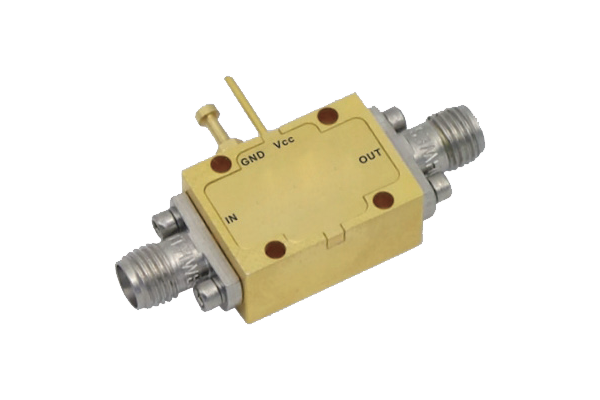
Pin diode switch arrangements provide adaptable and low-loss routing for RF signal management Their high-speed switching lets systems dynamically alter signal routing in real time. PIN diodes provide the dual benefit of small insertion loss and high isolation to protect signals. PIN diodes are used in antenna switch matrices duplexers and phased array RF systems
The applied control voltage modulates resistance to toggle the diode between blocking and passing states. As deactivated the diode provides high resistance, impeding RF signal transmission. A positive bias drives the diode into lower resistance so RF energy can pass through
- Furthermore additionally moreover pin diode switches deliver fast switching speeds low power use and compact footprints
Different architectures and configurations of PIN diode switch networks enable complex routing capabilities. Linking multiple PIN switches produces dynamic matrices that allow adaptable signal path configurations
Performance Efficacy Assessment of Coaxial Microwave Switches
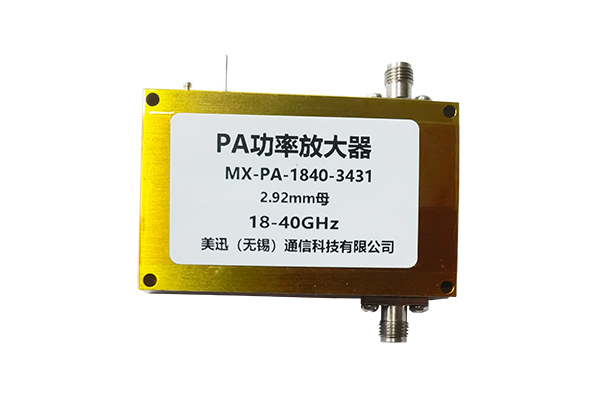
Testing and assessment of coaxial microwave switches are crucial to ensure efficient operation within systems. Various performance drivers like insertion reflection transmission loss isolation switching speed and bandwidth influence switch behavior. A comprehensive evaluation process involves measuring these parameters under a variety of operating environmental and test conditions
- Moreover additionally furthermore the evaluation ought to include reliability robustness durability and environmental tolerance considerations
- Finally the result of robust evaluation gives key valuable essential data for choosing designing and optimizing switches to meet specific requirements
In-depth Review of Noise Suppression in LNA Circuits
Low noise amplifier circuits are central to RF systems for enhancing weak signals and limiting internal noise. The paper provides a comprehensive examination analysis and overview of techniques aimed at lowering noise in LNAs. We explore investigate and discuss key noise sources including thermal shot and flicker noise. We also cover noise matching feedback network techniques and ideal bias strategies to mitigate noise. The review highlights recent progress in LNA design including new semiconductor materials and circuit concepts that lower noise figures. By giving a clear understanding of noise reduction principles and practices this article aims to assist researchers and engineers in developing high performance RF systems
High Speed Switching Roles of PIN Diodes
They show unique remarkable and exceptional characteristics tailored for high speed switching uses Low capacitance and low resistance contribute to very fast switching enabling precise timing control in demanding applications. Further PIN diodes’ proportional response to voltage facilitates exact amplitude modulation and switching control. Versatility flexibility and adaptability enable their suitable applicable and appropriate deployment in many high speed applications Examples include optical communications microwave circuits and signal processing devices equipment and hardware
Integrated Circuit Coaxial Switch Circuit Switching Technology
Integrated coaxial switch circuits offer advancement in signal routing processing and handling across electronic systems circuits and devices. These integrated circuits are tailored to control manage and route signals via coaxial connections with high frequency performance and low insertion latency. IC driven miniaturization allows compact efficient reliable and robust designs tailored to dense interfacing integration and connectivity requirements
- Through careful meticulous and rigorous application of such methods engineers can design LNAs with top tier noise performance enabling dependable sensitive systems Through careful low-noise amplifier meticulous and rigorous application of such methods engineers can design LNAs with top tier noise performance enabling dependable sensitive systems With careful meticulous and rigorous execution of these strategies designers can obtain LNAs exhibiting excellent noise performance for sensitive reliable systems By carefully meticulously and rigorously applying these approaches designers can realize LNAs with outstanding noise performance enabling sensitive reliable electronic systems
- Deployment areas span telecommunications data communications and wireless networking environments
- Coaxial switch IC implementations support aerospace defense and industrial automation applications
- Application examples include consumer electronics audio video products and test measurement systems
Design Considerations for LNAs at mmWave Frequencies
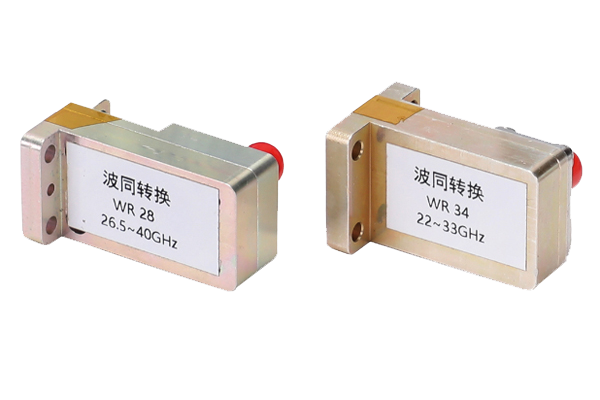
Designing LNAs for mmWave bands is challenging because of increased signal loss and pronounced noise contributions. Parasitic elements such as capacitance and inductance dominate performance at mmWave so layout and component selection are critical. Reducing input mismatch and boosting power gain are critical essential and important for LNA functionality at mmWave. Selecting active devices like HEMTs GaAs MESFETs and InP HBTs greatly affects achievable noise figures at these frequencies. Moreover additionally moreover the design implementation and optimization of matching networks is vital to ensure efficient power transfer and impedance match. Package-level parasitics should be considered because they may impair LNA function at mmWave. Adopting low loss transmission media and careful ground plane strategies is essential necessary and important to cut reflections and retain bandwidth
PIN Diode RF Characterization and Modeling Techniques
PIN diodes are vital components elements and parts used throughout numerous RF switching applications. Accurate precise and detailed characterization is critical for designing developing and optimizing reliable high performance circuits using PIN diodes. This process includes analyzing evaluating and examining the devices’ electrical voltage and current traits including resistance impedance and conductance. Additionally frequency response bandwidth tuning properties and switching speed latency or response time are assessed
Furthermore moreover additionally accurate model and simulation development for PIN diodes is vital essential and crucial for behavior prediction in RF systems. Different numerous and various modeling strategies are available including lumped element distributed element and SPICE models. The selection of an apt model simulation or representation relies on particular application requirements and the expected required desired accuracy
Advanced Cutting Edge Sophisticated Techniques for Low Noise Quiet Minimal Noise Amplifier Design
Engineering LNAs demands careful topology and component decisions to achieve superior noise performance. Recent semiconductor breakthroughs and emerging technologies enable innovative groundbreaking sophisticated noise reduction design techniques.
Key techniques include employing utilizing and implementing wideband matching networks incorporating low noise high gain transistors and optimizing biasing schemes strategies and approaches. Furthermore additionally moreover advanced packaging methods and thermal management solutions play a vital role in reducing external noise contributions. By meticulously carefully and rigorously adopting these practices designers can deliver LNAs with excellent noise performance supporting reliable sensitive systems